Effective IP protection isn't one action. It's a continuous cycle. 

Our methodology combats counterfeiting, piracy, and brand abuse through a cycle
where each action feeds the next.

How we surface the threat before it scales.
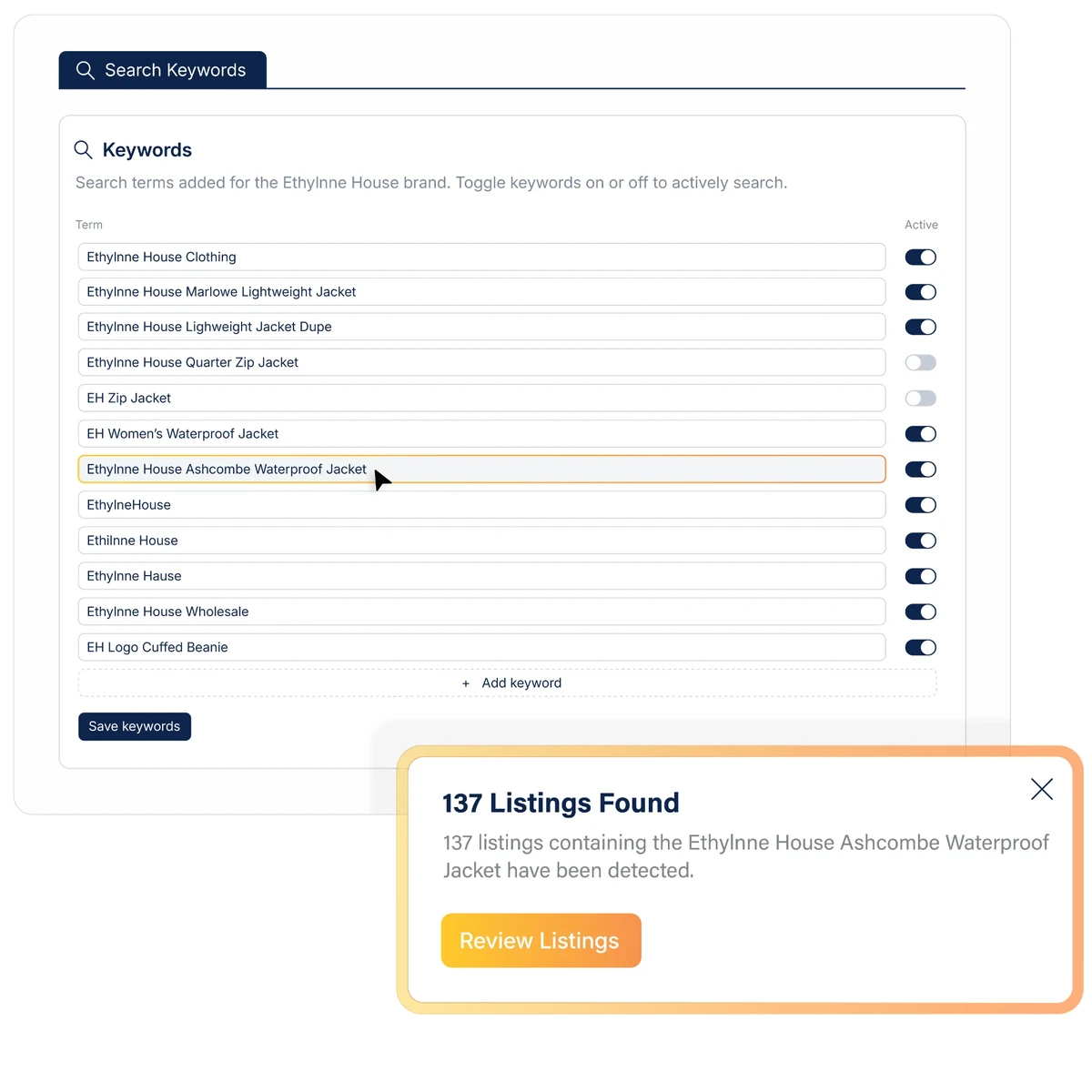
What platforms and channels are monitored?
IP House covers a broad range of digital environments including major e-commerce marketplaces, social media platforms, standalone and independent websites, apps, forums, and the dark web. Unlike some providers that focus solely on large marketplaces, coverage extends to independent storefronts and hidden networks where infringers operate to avoid detection.
Are physical markets monitored along with digital marketplaces?
Yes. Online monitoring identifies where threats are appearing digitally, while field investigation teams cover physical markets, supply chain hotspots, and on-the-ground locations where counterfeit goods are manufactured or distributed. In-person surveillance uncovers activity that digital monitoring alone might miss.
What’s the difference between monitoring and intelligence?
Monitoring surfaces of suspected infringements as they appear, like flagging listings, posts, and activity across platforms. Intelligence goes further: it assesses the scale and impact of what’s been found, prioritizes targets for action, and builds a picture of who is behind the activity and how they operate. Monitoring tells you something is there; intelligence tells you what it means and what to do about it.
DDEE Page Detect

How we cut off illicit activity at the source.
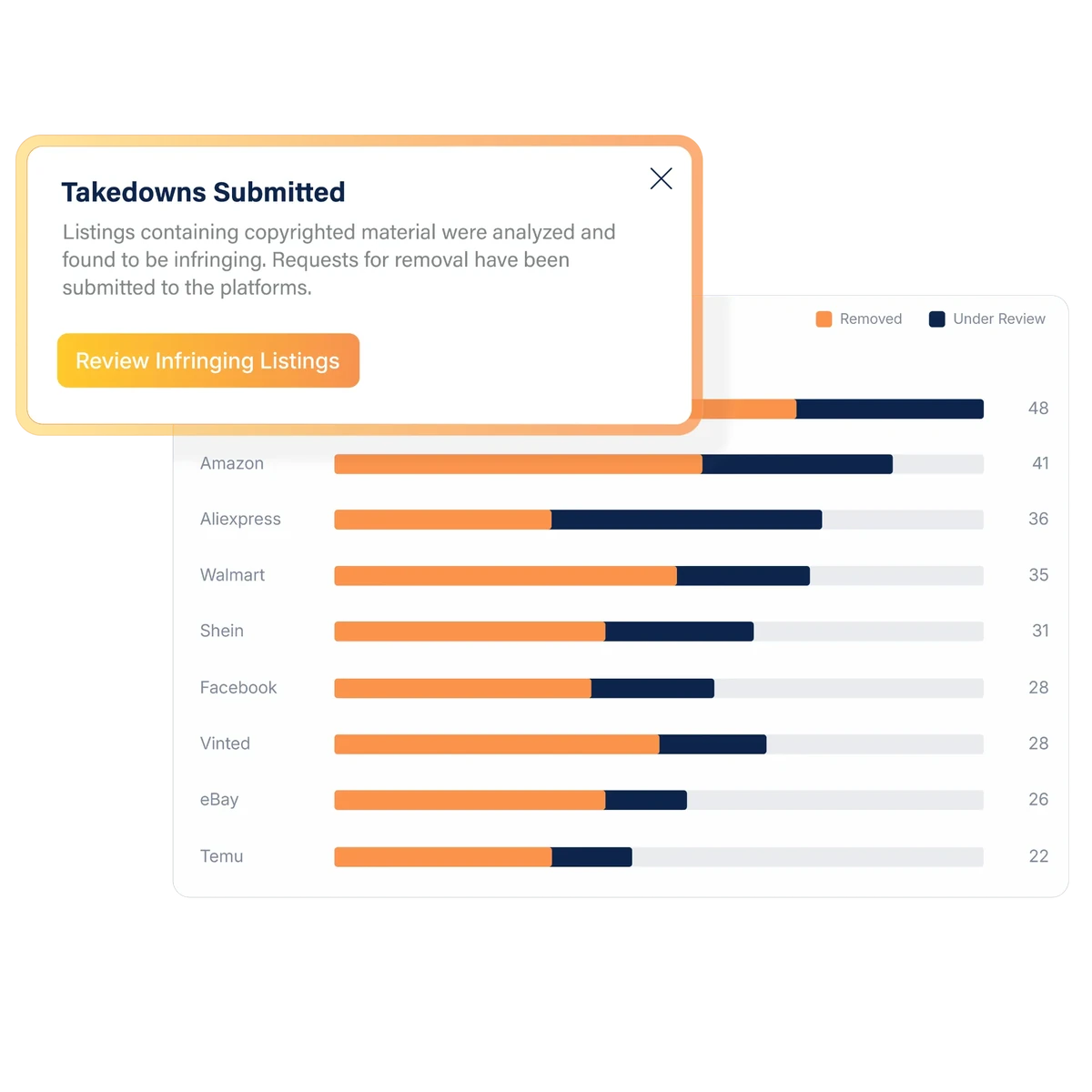
What happens after an infringing listing is detected?
Each detected listing is assessed to determine the most strategic response. Some cases may be processed through an automated takedown system that manages notice delivery, while high-impact cases are escalated for deeper investigation or flagged for Schedule A litigation. Evidentiary screenshots are captured before any notices are issued, and a complete audit trail is maintained throughout the process.
How are infringing listings prioritized for action?
Cases are assessed based on scale, impact, and strategic value to a brand. High-volume sellers, operations linked to wider networks, and listings posing the greatest risk to the rights holder are prioritized first. This grading logic means enforcement effort goes where it matters most.
Outside of marketplace listings, what are other ways IP House disrupts illicit activity?
Disruption extends beyond removing individual listings. Where infringers operate through standalone websites, we work with hosting providers and domain registrars to take down the infrastructure that’s keeping those sites live, not just the content on them. We also flag infringing activity to payment processors, cutting off the financial channels an operation depends on. For Revenue Recovery cases, Temporary Restraining Orders freeze marketplace and payment accounts directly, removing an infringer’s ability to operate or access their funds.
DDEE Page Disrupt

How we build the intelligence picture that makes enforcement possible.
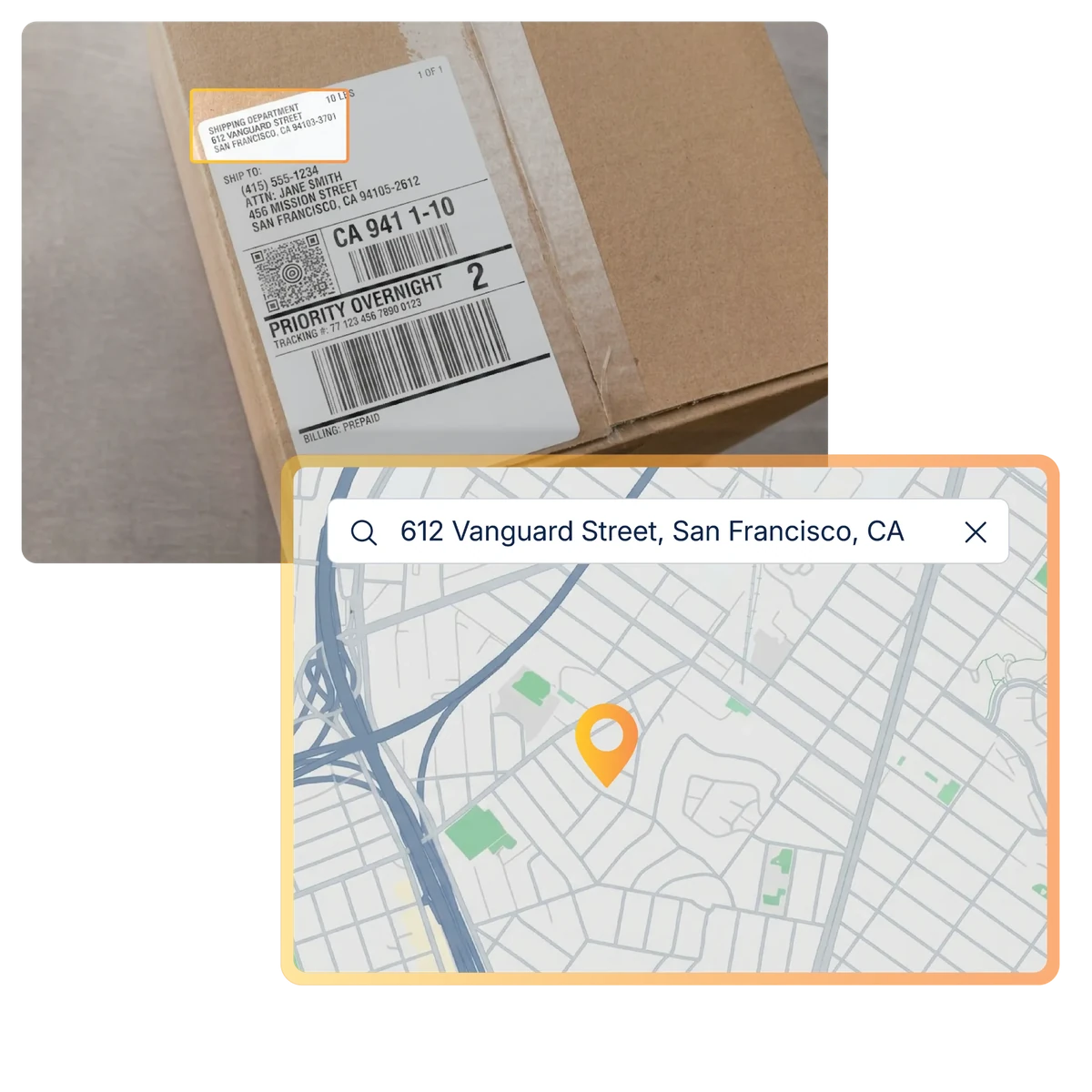
When does a case get escalated beyond a takedown?
Escalation happens where conventional disruption is insufficient, like when a seller resurfaces after removal, when a larger operation is suspected behind a storefront, or when the evidence needed to support legal action can’t be built through takedowns alone. At that point, investigators go further using covert test purchases, cross-border online and offline investigations, OSINT and HUMINT techniques, and supply chain tracing back to the source.
How are the people behind an operation traced?
Investigators combine multiple techniques: OSINT research links digital footprints, correlates behavioral patterns, and connects anonymous activity to real individuals. Covert outreach and engagement on websites, forums, social media, and apps uncover identities and relationships. Dark web trawling collects data from hidden networks. Field investigations, HUMINT and on-the-ground surveillance verify what online intelligence suggests and maps the physical distribution network behind it.
How is evidence handled?
Evidence is collected and maintained to a standard that meets or exceeds law enforcement requirements. Evidentiary screenshots and photographs are captured, and a chain of custody is maintained throughout. Test purchases are received, logged, and stored at a dedicated evidence-handling facility. Every case goes through a three-tier review - internal QA, legal, and client review - before any legal filing may proceed.
DDEE Page Escalate

How we turn evidence into outcomes.

What legal actions are supported?
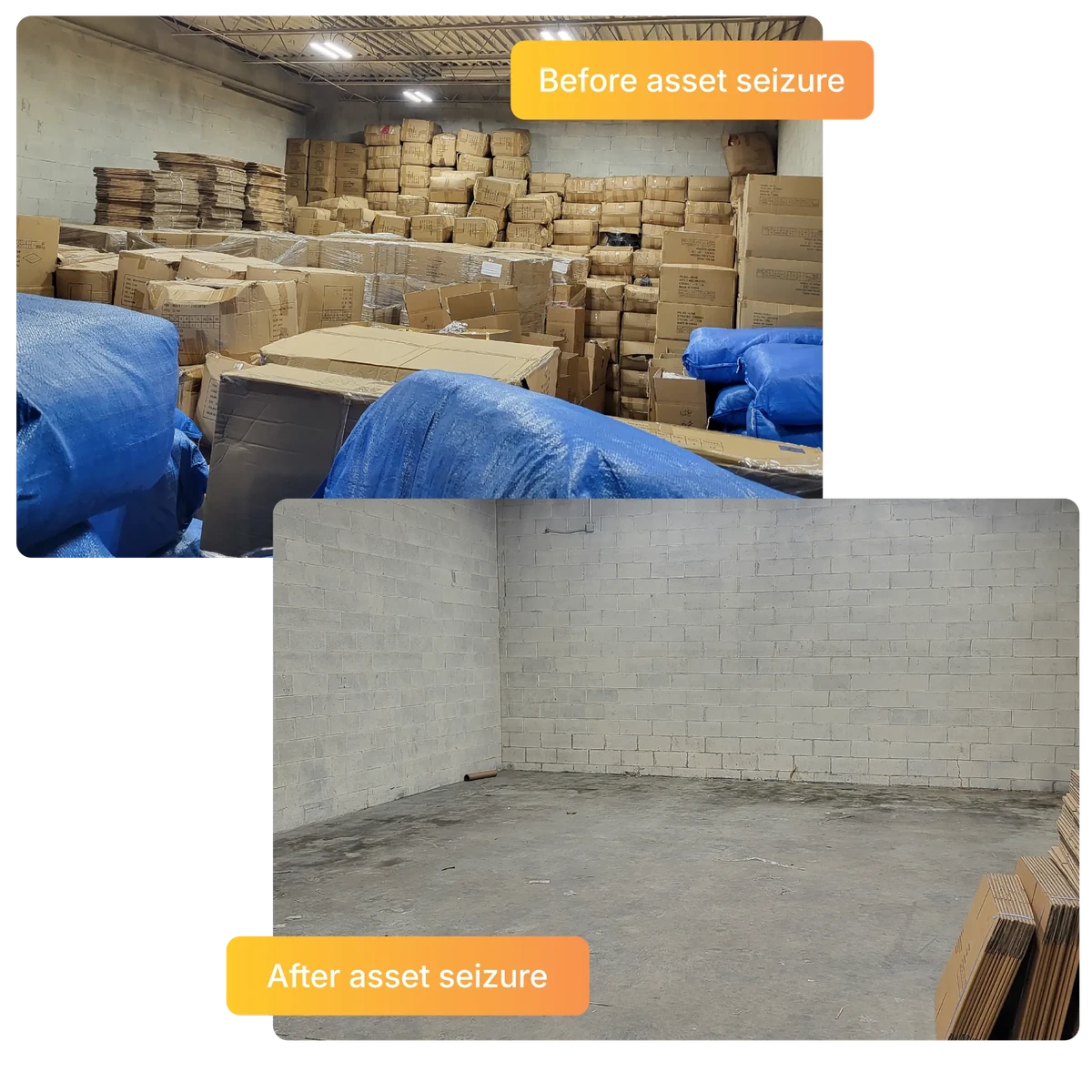
IP House coordinates and supports a full range of enforcement options alongside partner law firms and law enforcement agencies, including cease and desist notices, knock-and-talks, civil litigation, customs seizure support, expert witness statements, and criminal prosecution referrals. On-the-ground presence is provided during actual product seizures, with sworn affidavit services, product identification, and documentation of goods seized.
When does Law Enforcement become involved?
We initiate contact with law enforcement when the evidence and scale of an operation warrants it, and in close collaboration with the brand. Intelligence is shared directly with the agencies equipped to act on it. Raids and seizures are coordinated in collaboration with local law enforcement when a case reaches that threshold.
What happens to recovered assets?
Once a default judgment or settlement is reached through our Revenue Recovery program, recovered assets are turned over and returned to the brand. Importantly, all initial costs, including test purchases and law firm fees, are 100% covered by IP House, so recovered revenue can be reinvested into additional IP enforcement actions.
DDEE Page Enforce

A Continuous Cycle of Intelligence and Action

Enforcement That Goes Beyond the Listing

Most providers stop at marketplace takedowns. We work to disrupt the full infrastructure behind an operation including listings, hosting, domains, and payment processors, so infringers lose the ability to operate.

One Process, Not Separate Engagements

Detection, disruption, escalation, and enforcement operate as one connected workflow, with each stage informing the next. Intelligence from enforcement feeds back into detection to strengthen the entire cycle.

Protection That Pays for Itself

Through Revenue Recovery, funds recovered from infringers are returned back to the brand with zero upfront cost. IP House covers test purchases, law firm fees, and other related expenses, creating a program that can fund the next cycle of detection and enforcement.

Stay in control of your brand,
anywhere it lives.

Our experts are here to help you assess your IP protection needs.   

Uncover the Source Behind the Data